The Oil Time Bomb: Alaska's Greatest Challenge
As the world goes green, will oil-bound Alaska be left in the dust?

Alaska’s motto is “North to the Future,” but in monetary terms, Alaska’s economy has been practically the same for decades. We are all just subjects of King Oil.
I am sure most of our readers are aware that Alaska relies heavily on oil money to fund itself, but few people actually realize how intense that reliance actually is. Allow me to put it in perspective:
According to the Resource Development Council for Alaska, a trade association focused on development, oil revenue often accounts for a whopping 90% of the state’s unrestricted General Fund revenues, a clear signifier of the state’s reliance on oil funds. The facts get even worse when you look at Alaska’s employment statistics: A report from the American Petroleum Institute in 2019 found that about 47,300 total jobs were supported directly or indirectly through Alaska’s oil industry, making up about 10% of the state’s employment. It’s also worth noting that the true number may be much higher. That same report cited previously from the Resource Development Council claims that jobs from oil and petroleum actually make up around a quarter of Alaska’s employment.
What this means is that Alaska is not just reliant on oil, it cannot survive without it. We already see the harmful effects of Alaska’s oil dependency every time the price of oil drops. Just this year, Alaska expects to see 222 million dollars less in revenue than initial projections due to global oil prices being lower than earlier estimates. In the past, the state has also been forced to take on major deficits, the scale depending on the price of oil that year.
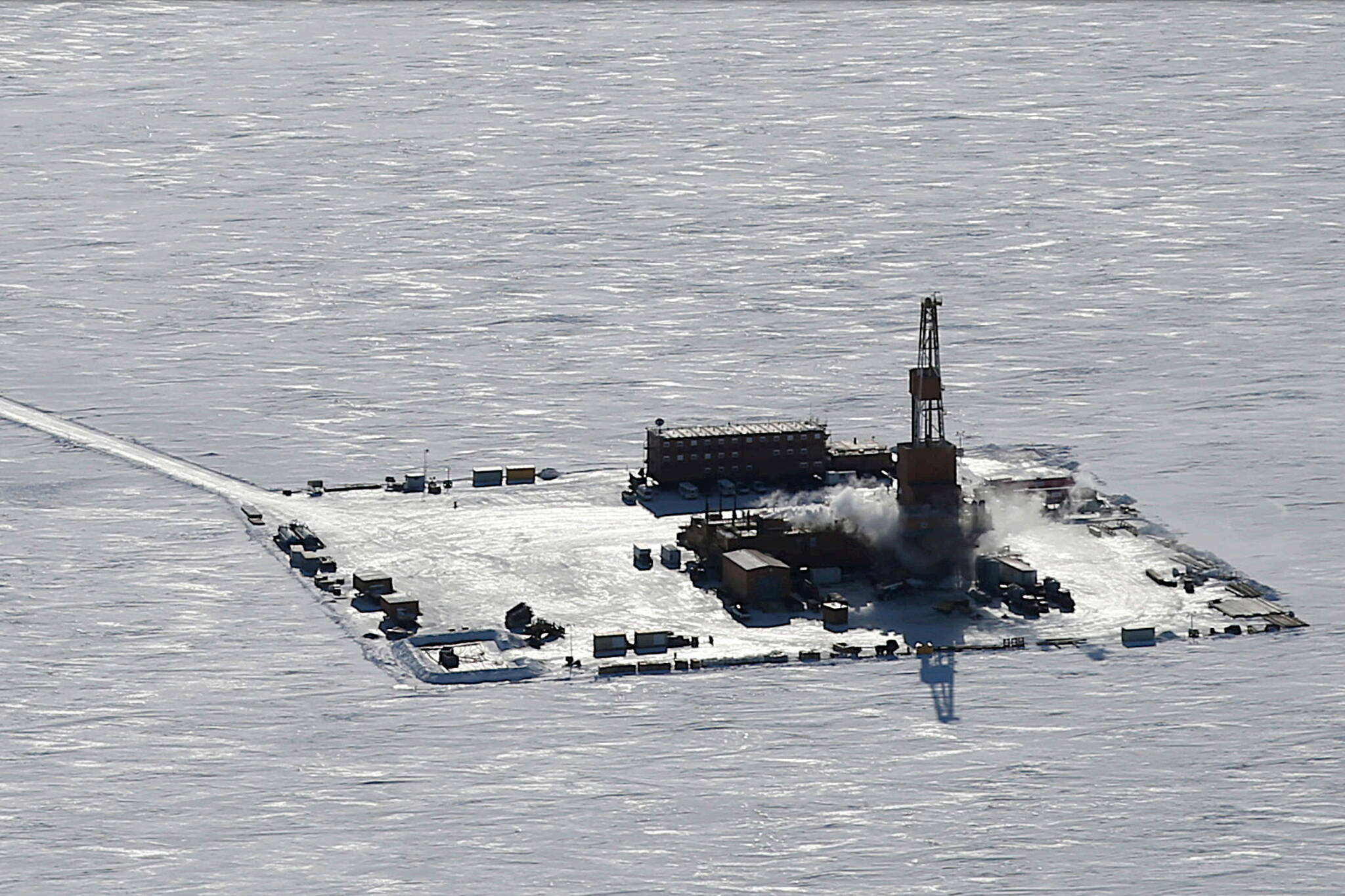
Some might wonder why this is an issue; after all, Alaska has plenty of oil! With the ongoing Willow Project in the North Slope, Alaska will continue to produce oil for decades! Why should we worry now about an issue that is so far removed from us? I have two main reasons: first, Alaska is seeing itself become a victim of the resource curse. Secondly, oil wealth is limited, and will not last forever.
The Oil Problem
Due to our reliance on oil, Alaska has become a victim of the resource curse. Also known as the paradox of plenty, it refers to the observation first made by British economist Richard Auty in his 1993 book, Sustaining Development in Mineral Economies that economies that rely heavily on natural resources are often weaker and slower growing than economies based on other sectors.
According to a troubling mid-2025 report from the Alaska Beacon, the state’s GDP (value of all finished goods and services produced in an economy annually) rose only 0.4% yearly on average from 2015 to 2025, the 2nd-slowest growth of any state in the Union. This sounds bad, but it gets far worse when you examine real GDP, which excludes GDP increases as a result of increased oil prices. In terms of real GDP, Alaska peaked in 2009, and has been stagnant ever since.
Without true growth, Alaska’s economic prospects will just get more and more dire. Opponents to this perspective, as I have already noted, will argue that increased oil production will make up for this. While it is the case that more oil means a higher GDP and increased employment, this leads me into my second point: the lessened solvency of an oil economy as the world transitions away from it.
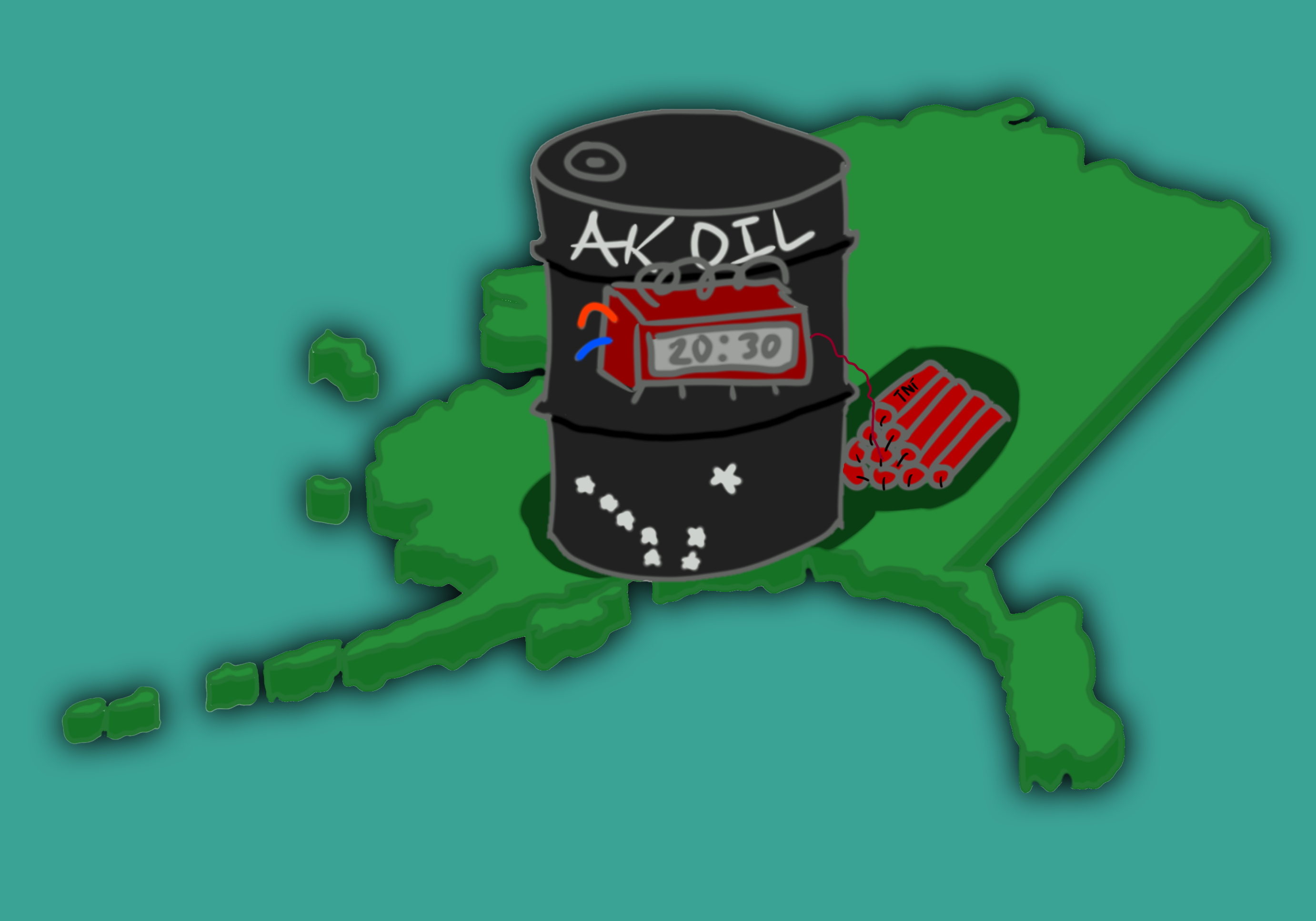
In the past few months, we have seen large-scale overproduction of oil, with supply outpacing demand. Consequently, the U.S. Energy Information Administration projects the price of oil to decline as supply continues to grow faster than demand for it. This is a massive threat to Alaska’s finances, for the reasons previously discussed. I call this problem the oil time bomb, because there is a chance that oil demand will decrease so much as a consequence of clean energy that oil prices will become too low to sustain Alaska’s spending.
We don’t know when oil demand will peak, but when it does, it’s bad news for Alaska. Projections vary. Some, such as the consulting firm Wood Mackenzie, report that it will peak in 2032. Predictions on the far end include the likes of the International Energy Agency, which predicts a peak in 2050 (revising an earlier estimate of 2030). The consensus is that oil demand will peak somewhere in the near future.
Since it appears inevitable, we should not concern ourselves with trying to predict doomsday. Alaska needs to take urgent steps to address the oil time bomb.
The solution to the oil time bomb is, first of all, for Alaskan politicians to stop being so short-sighted in their approaches to the Alaskan economy. It seems to me that there is this prevalent, naive view, especially on the Alaskan right, that we can continue developing and developing our resources forever until all of us are rich. In truth, the “development” they speak of is more akin to wild extraction; these natural resources are limited and temporary, and while it is right to utilize them for our benefit, it is foolish to contend that these are the only things Alaska has to offer.
First of all, Alaska needs to attract talent and business from out of state. Alaska ought to focus on cutting regulations and permit processing times to make the state more viable for small business-owners, while also creating a business-friendly environment for lower-48 companies that offer goods and services other than extraction. Additionally, as the north becomes warmer, it would also behoove Alaska to begin spending more on infrastructure to facilitate commerce, a topic I have covered once before.
In the spirit of forward-facing policy, we should also take a more critical look at how we utilize the Alaska Permanent Fund; as it currently stands, the Alaska Permanent Fund is split into two accounts: the Earnings Reserve Account and the principal.
The former can be tapped into any time by the legislature with a simple vote, while the principal cannot be touched. Presently, the legislature draws 5% of the TOTAL (ERA + principal) Permanent Fund every year, but they only can draw from the ERA, resulting in the ERA being drained quicker than it can be replenished. Instead of this, we must reform our ability to draw on the fund, limiting it based on yearly performance. Angela Rodell of the Alaska Beacon writes a good commentary on this here.
Alaska needs economic restructuring that focuses on a future without oil and extraction. We need to diversify, adapt, and overcome, putting the needs of Alaskans first.
If we want our motto of “North to the Future” to mean anything, it’s about time we start thinking about it.